






Wabi Sabi Furniture
Discover our Wabi Sabi furniture collection, designed to bring timeless beauty and imperfect perfection to your home. Embrace the serene, minimalist style with natural wood tones, rustic textures, and organic shapes.
Perfect for creating a tranquil interior, our pieces highlight the beauty of simplicity and imperfection. Ideal for those seeking a calming, earthy aesthetic, our collection features handcrafted tables, chairs, and decor that celebrate the art of living with intentionality.
Transform your space with Wabi Sabi furniture, offering unique, sustainable elegance that harmonizes with any room's natural color palette and understated charm.
FAQ
What is wabi sabi furniture?
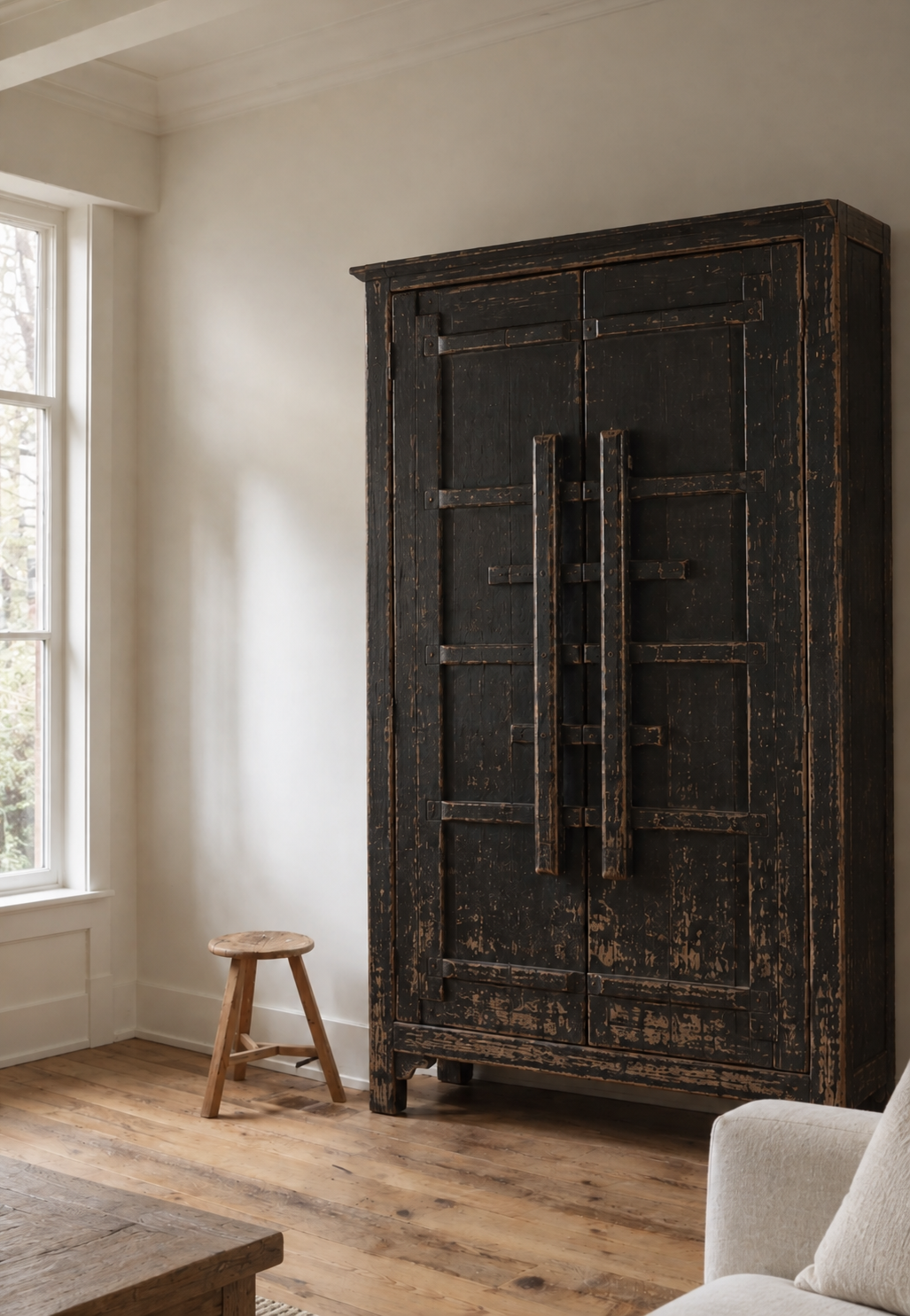
Wabi sabi is a Japanese idea that finds beauty in things that are imperfect, natural and shaped by time. In furniture it shows up as honest materials and simple forms. Solid wood keeps its knots, grain and color variation instead of being sanded and stained into uniformity. A wabi sabi piece doesn't try to look new. It looks like it belongs in the room and will age well there.
What makes a good wabi sabi sideboard or cabinet?
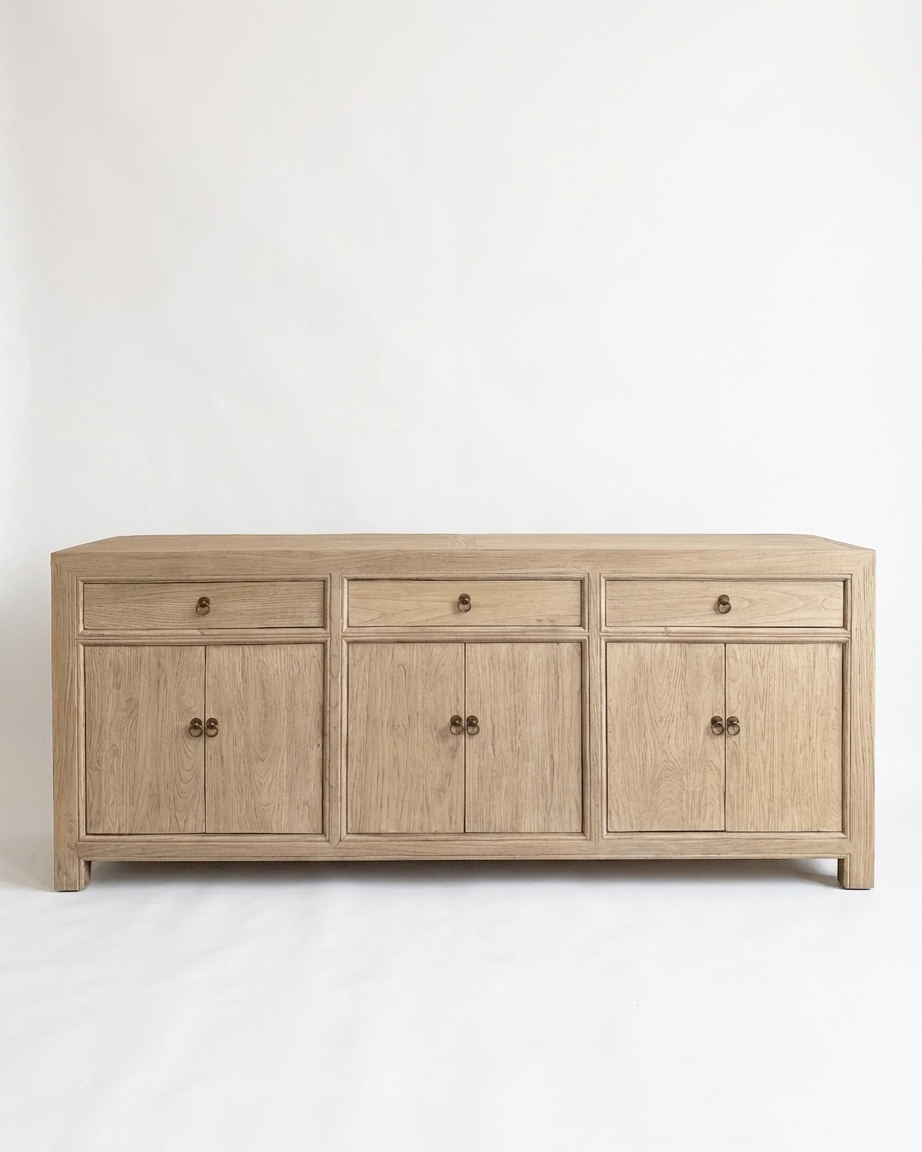
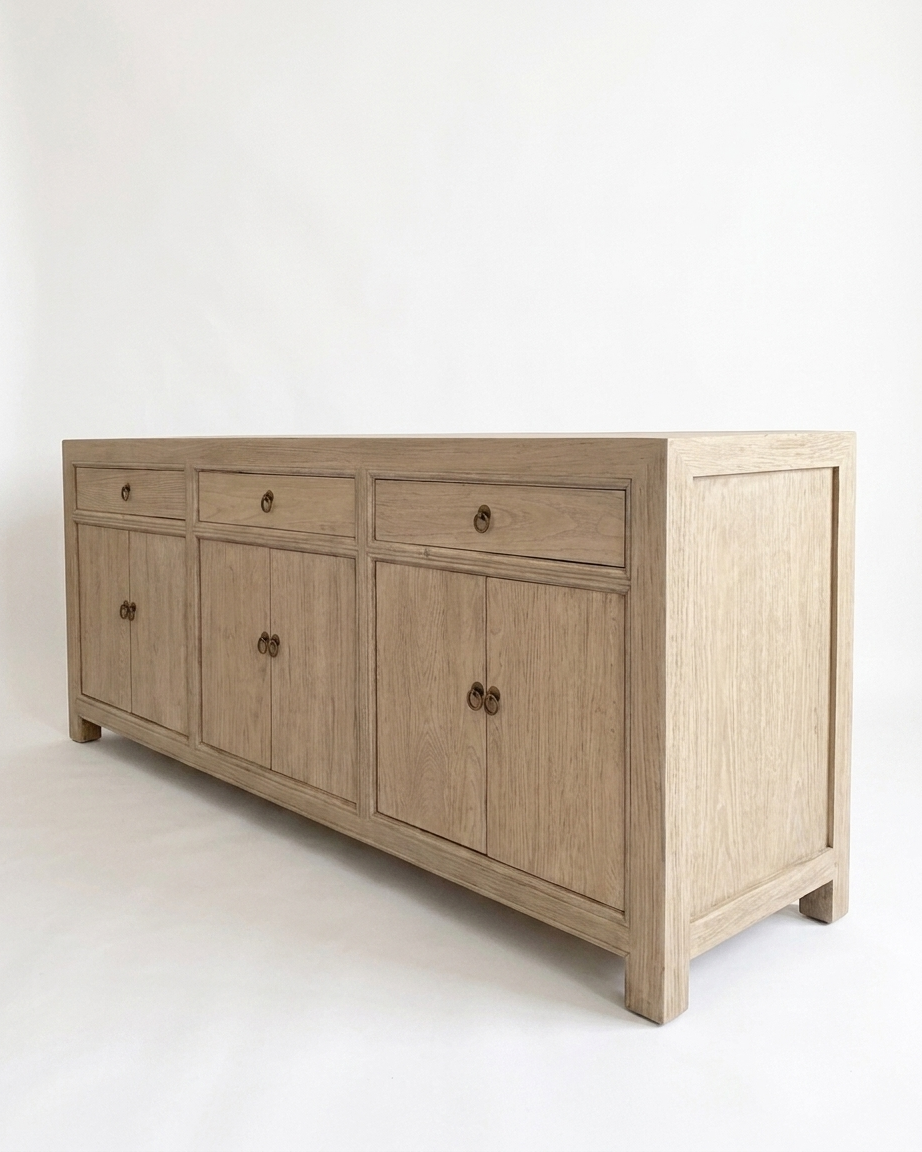
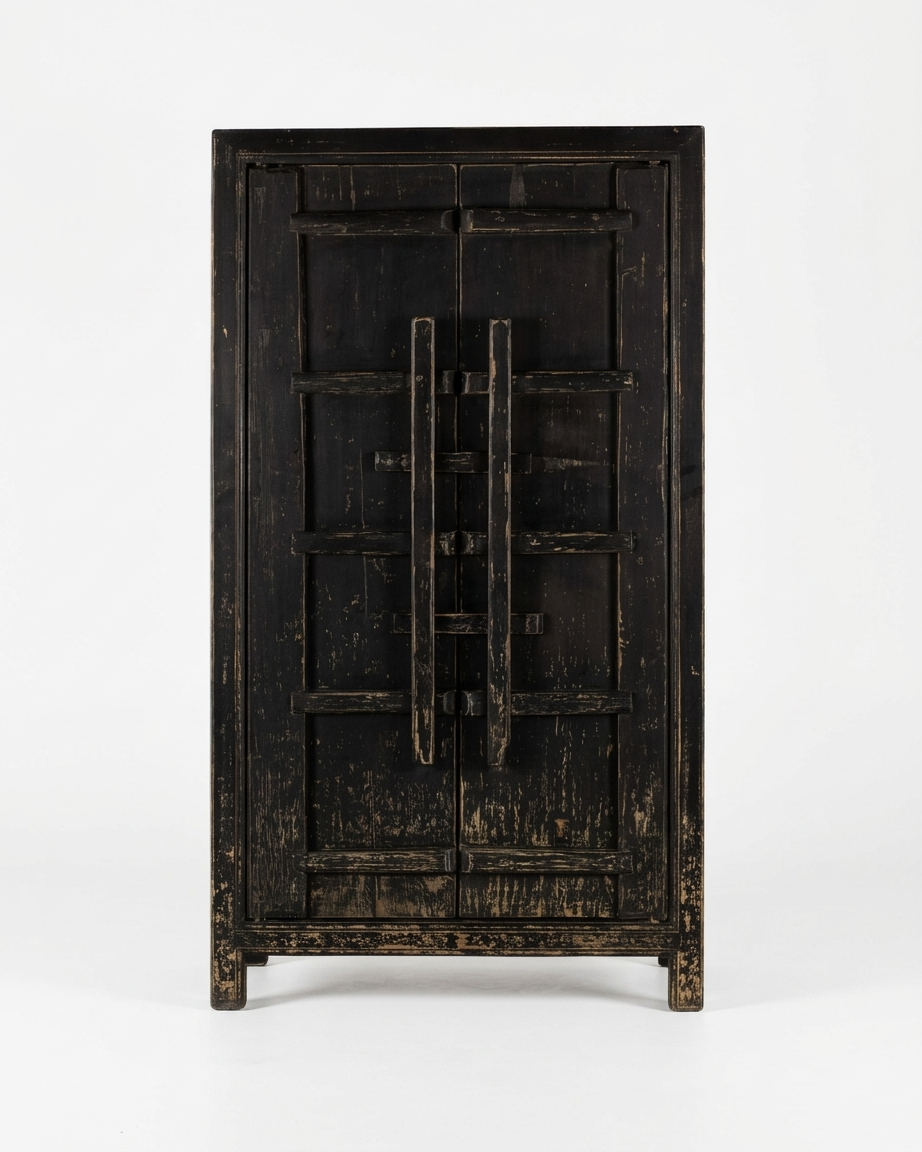
Look for solid wood with visible character, simple door and drawer fronts, and hardware that stays quiet, like iron rings, cup pulls or no hardware at all. Reclaimed elm is a natural fit because every board has its own grain and patina, so no two pieces look identical. A wabi sabi sideboard works in a dining room for linens and serveware, under a TV as a media console, or in an entryway as a grounding piece with a lamp and a few objects on top.
How do I choose a wabi sabi dining table?
Start with the room. A round table suits square rooms and smaller kitchens, while a long plank table works for narrow dining rooms and anyone who hosts often. Then look at the wood. Thick tops, solid bases and grain you can see and feel are what give a dining table the wabi sabi look. Plan on about 24" of table edge per person, and leave at least 36" around the table so chairs can pull out comfortably.
What chairs go with wabi sabi furniture?
Chairs in natural, tactile materials work best: woven cane, rattan, linen or boucle upholstery, and solid wood frames. Mixing textures matters more than matching, so a cane chair next to an elm dining table, or a boucle accent chair beside a reclaimed wood sideboard, feels intentional rather than coordinated. Keep colors earthy and soft, like oatmeal, sand, warm brown and charcoal, so the wood stays the focal point.
Are cracks and knots in reclaimed elm a defect?
No, they're part of the material. Reclaimed elm has already lived a life as part of a building or structure, so it carries knots, small surface checks, color shifts and marks from its history. These details are exactly what give wabi sabi furniture its character, and they don't affect the strength of the piece. Like all solid wood, elm moves slightly with changes in humidity, so keep it away from heating vents and direct sun and wipe spills promptly.