


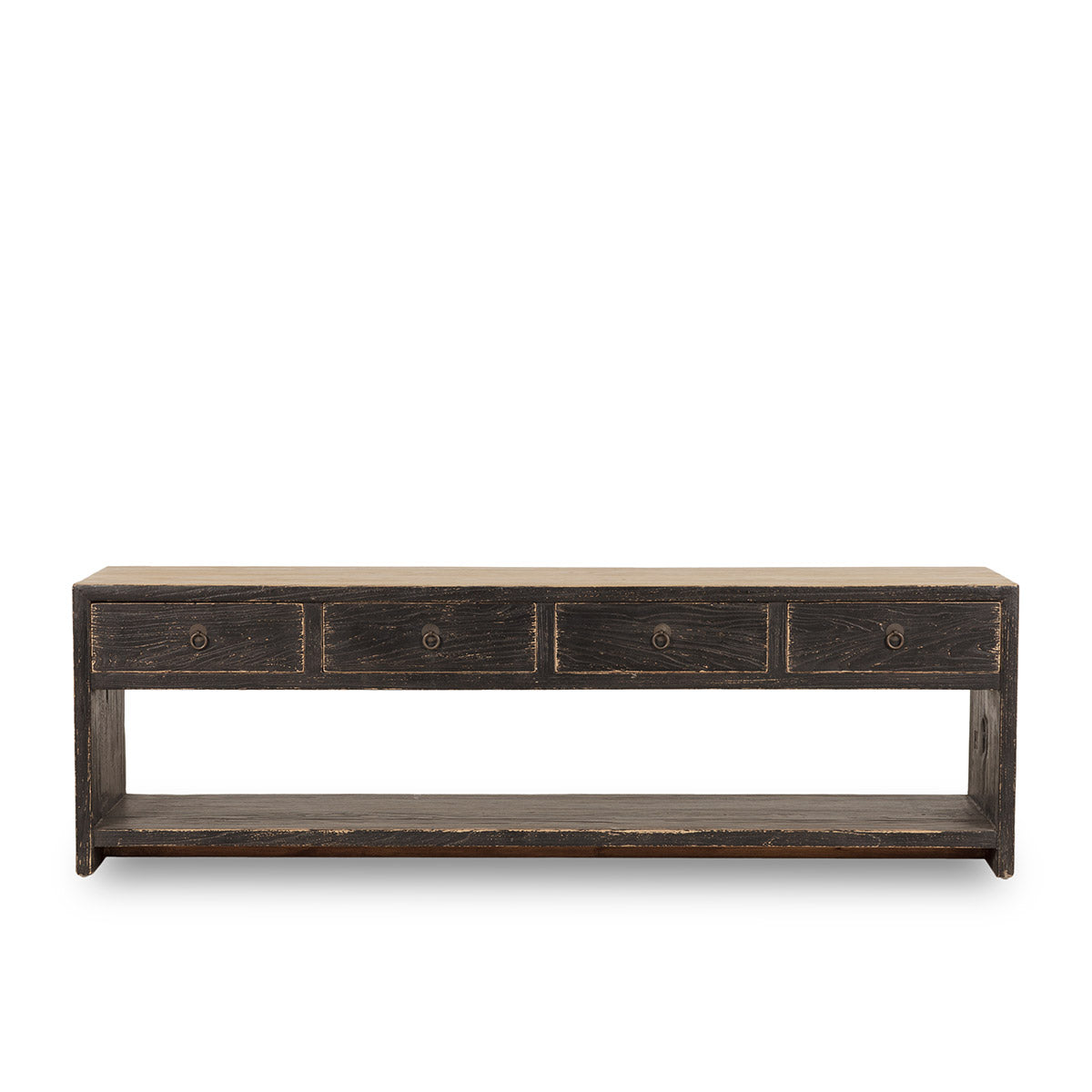
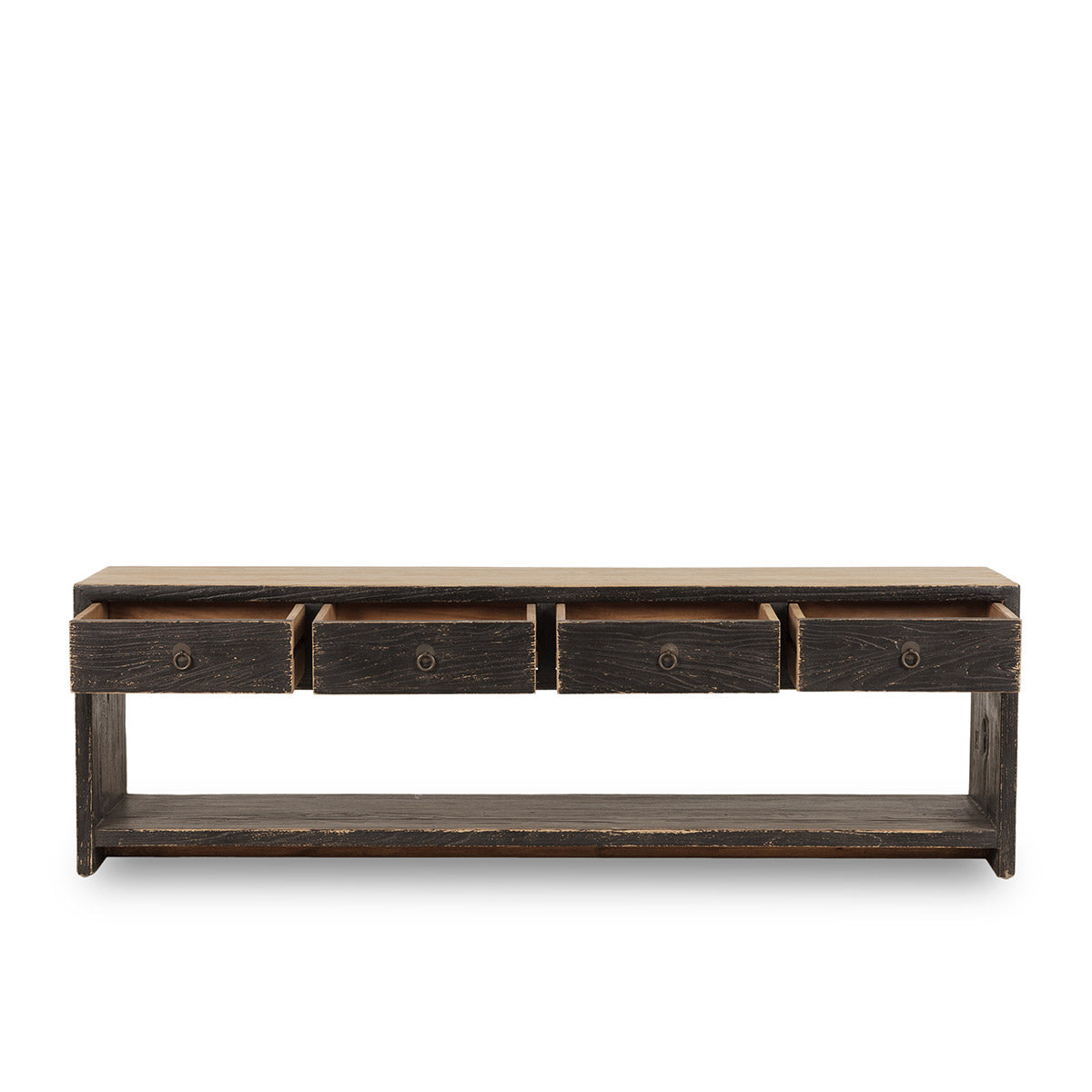
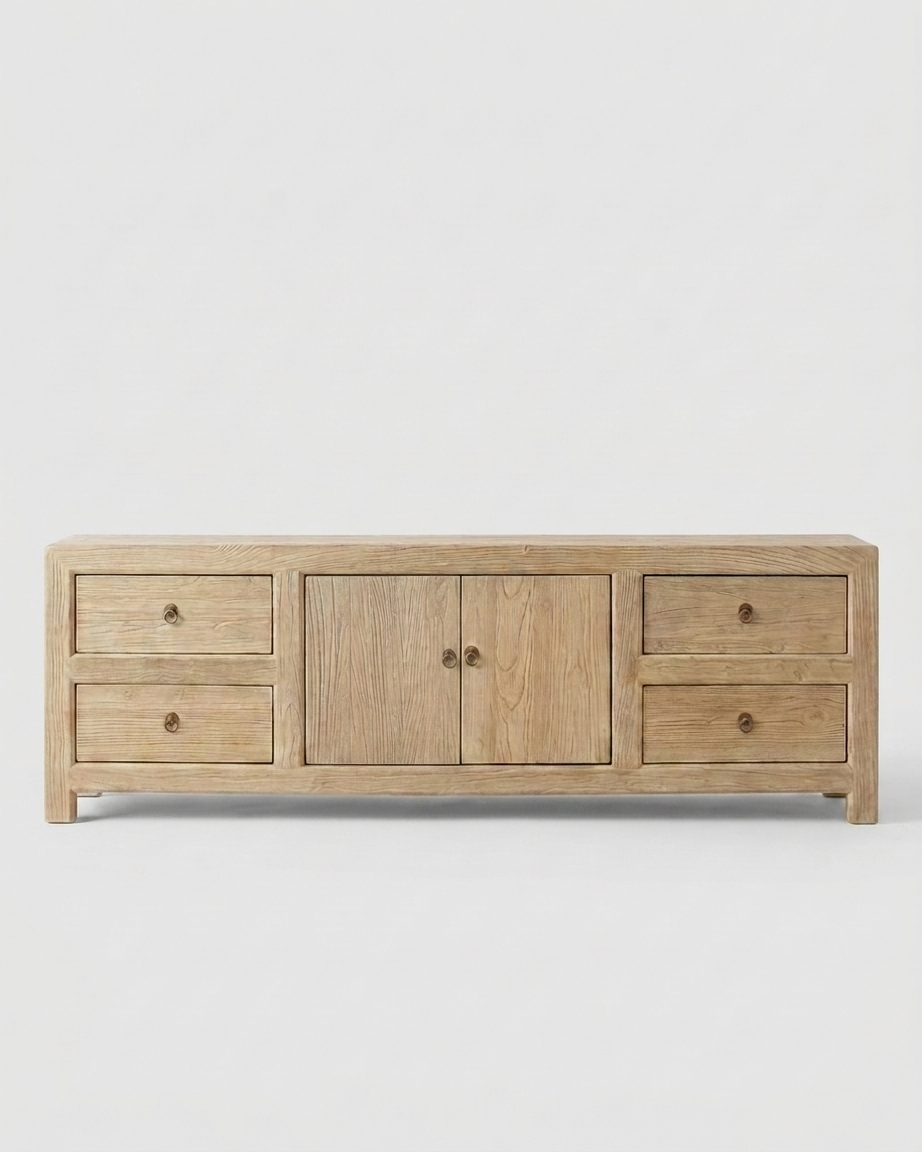
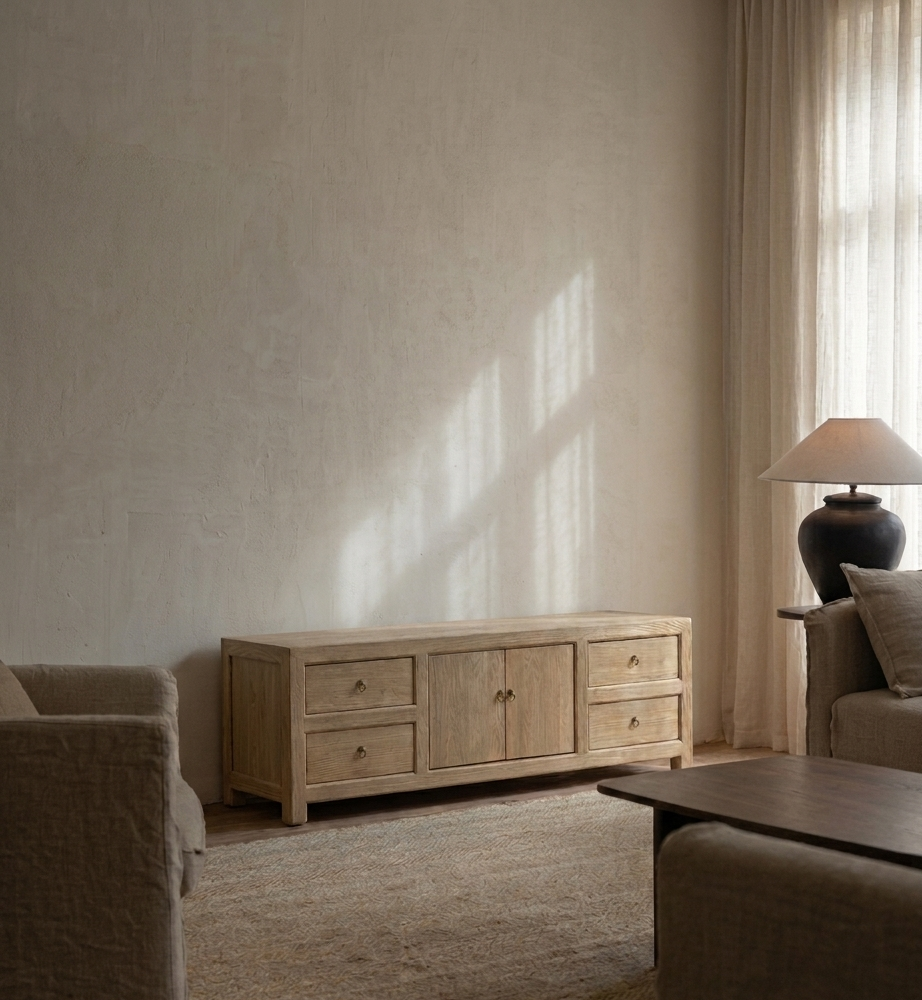


TV Stands & Media Consoles
Low Wood TV Stands for the Living Room
Our TV stands and media consoles are long, low pieces in solid elm and solid mango wood, with doors and drawers that keep cables, remotes and media out of sight. Each one works as a TV console, an entertainment center or simply a low cabinet under a wall-mounted screen, and the simple forms let the wood stand out more than the TV.
They run 63 to 79 inches wide and 15 to 27.5 inches high, which suits most 55 to 75 inch TVs. For 75 to 85 inch screens, see our media consoles for large TVs. Style the top lightly, with a lamp at one end and a stack of books or a ceramic piece at the other. Each listing includes exact dimensions so you can match the piece to your wall and screen.
For taller storage, see Consoles & Sideboards and Solid Wood Storage Cabinets.
FAQ
What size TV stand do I need for my TV?
Choose a console that is wider than your TV, ideally by several inches on each side, so the screen doesn't look like it's about to tip off the edge. For a 65" TV, which measures about 57" across, a console of 60" to 80" works well. If the TV is wall-mounted, the console can be wider still and act as the visual base for the whole wall.
How high should a media console be?
Most media consoles sit between about 20" and 30" high. The goal is to put the center of the screen near eye level when you're seated, which for most sofas is around 40" to 45" from the floor. Lower consoles suit low, deep sofas and wall-mounted TVs. Taller consoles suit firmer seating or TVs that sit directly on top of the piece.
Can I use a sideboard as a media console?
Often, yes. A sideboard works as a media console as long as its height keeps the screen at a comfortable viewing level and its depth fits your equipment. Many people prefer the look of a sideboard because it reads as furniture rather than electronics storage. Check the back panel for space to run cables, or plan to drill a small, neat opening.
How do I manage cables with a wood media console?
Run cables down behind the console and into the cabinet through an opening in the back panel. Inside, use a power strip and cable ties to keep everything tidy, and leave a little space around devices for airflow. If the TV is wall-mounted, an in-wall cable kit or a slim paintable cord cover keeps the wall clean between the screen and the console.
What's the difference between a TV stand, a media console, a credenza and a sideboard?
They overlap, but each leans toward a different use. A media console is usually the lowest of the three, sized to hold a TV and its equipment. TV stand and TV console are simply the everyday names for a media console. A credenza is low and long, traditionally used in offices or dining rooms. A sideboard is often a bit taller and is the classic dining room piece for serveware and linens. In practice, many of our pieces work in more than one role.