




Armoires & Wardrobes
Armoires for Bedroom, Dining & Entry
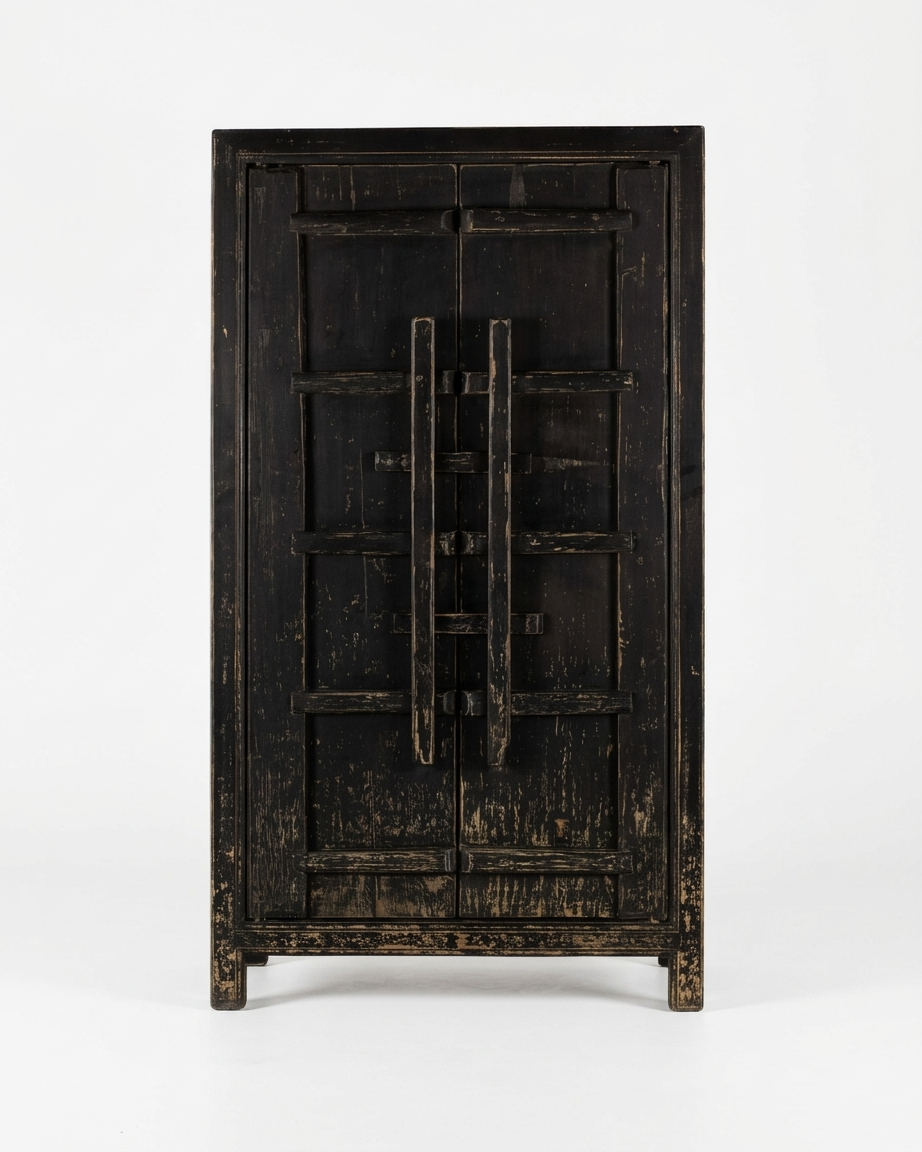
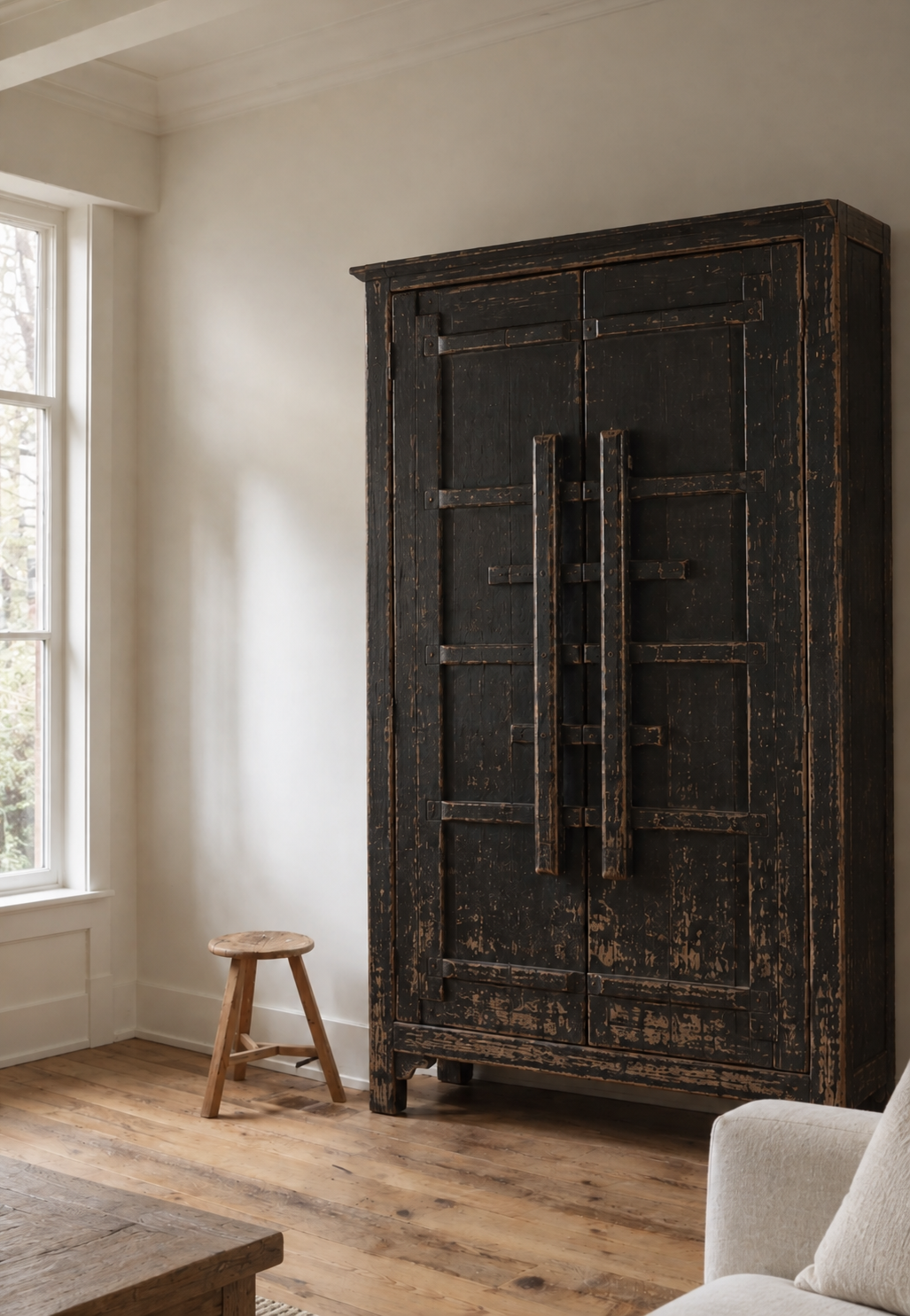
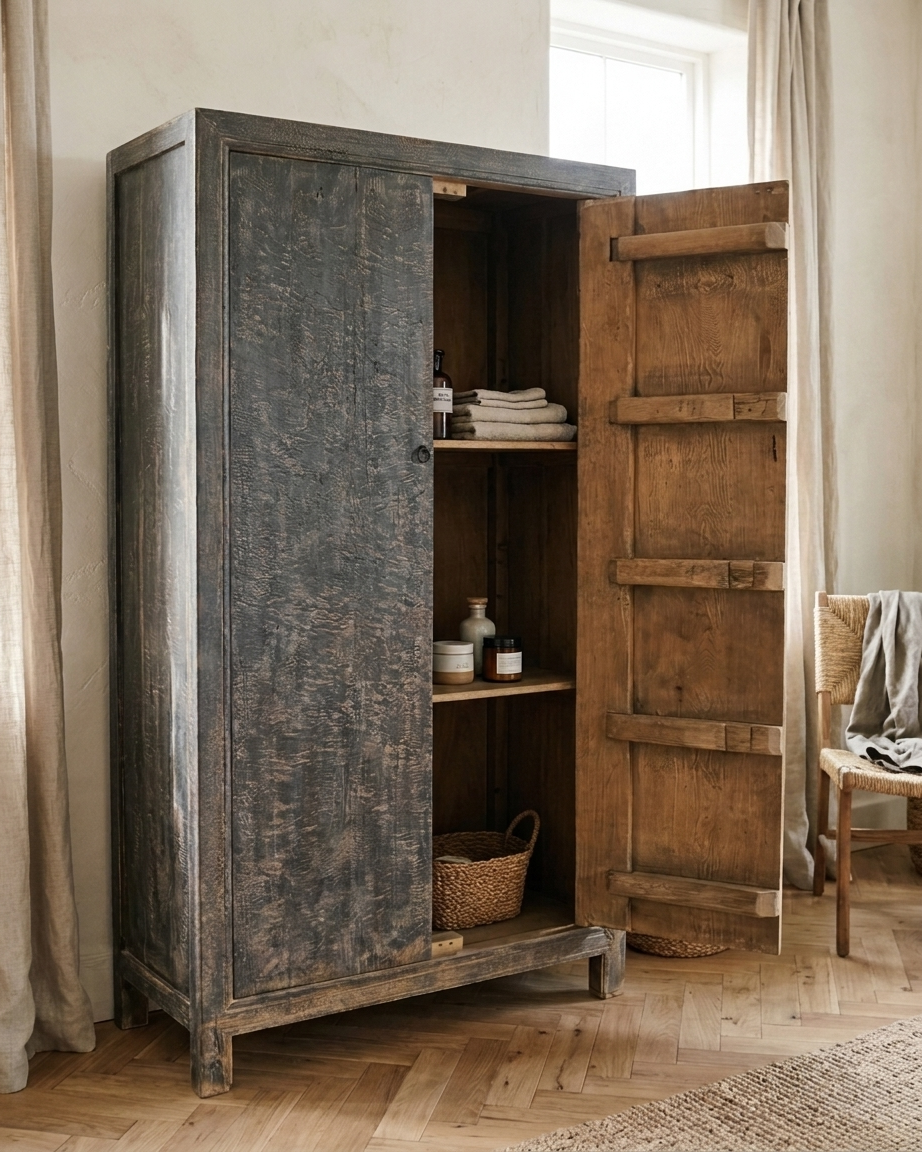
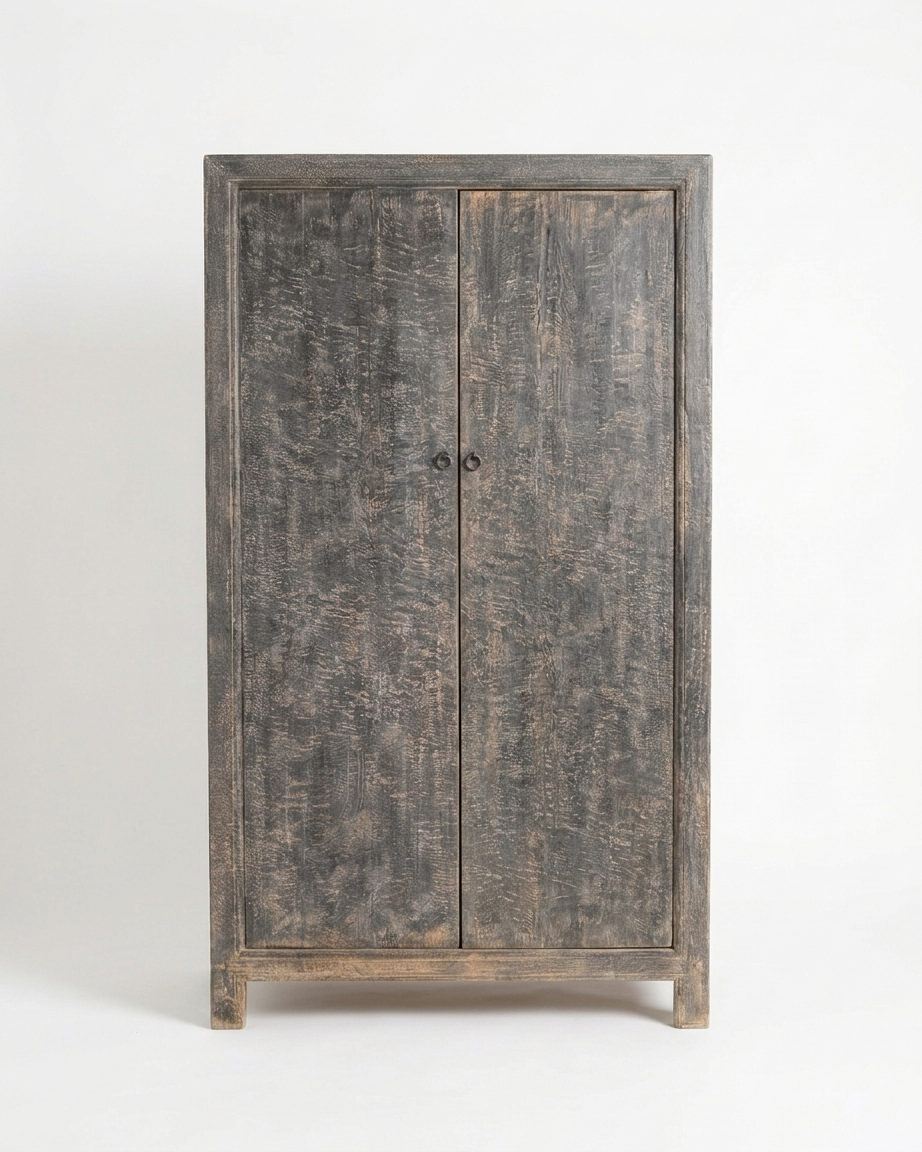
An armoire can change what a room is used for. In a bedroom it holds clothes and linens, in a dining room it becomes a pantry or bar, and in an entryway it hides coats and bags. Our armoires are tall pieces, mostly in solid elm, with simple door fronts and generous interior storage in natural and black finishes. They're made to stand on their own, with enough presence to anchor a wall and enough restraint to sit quietly next to other wood furniture. Interior layouts vary, so check the shelves, drawers and exact dimensions on each listing. For lower storage, see our Consoles & Sideboards.
For nightstands, dressers and a bench to go with it, see our wabi sabi bedroom furniture.
FAQ
What is the difference between an armoire and a wardrobe?
The terms are often used interchangeably. Traditionally, a wardrobe is designed mainly for hanging clothes, while an armoire is a tall cabinet that can hold clothing, linens or almost anything else behind its doors, often with a mix of shelves and drawers. Today, both describe a freestanding tall cabinet that adds storage where there is no closet, or more storage where there is.
Where can I use an armoire besides the bedroom?
Almost anywhere that needs closed storage. In a dining room, an armoire works as a pantry or bar cabinet for glassware, bottles and serveware. In an entryway it holds coats, bags and shoes. In a living room it can hide board games, blankets or a printer. In a home office it keeps files and supplies out of sight while still looking like a piece of furniture.
How much space do I need for an armoire?
Measure the wall width and ceiling height first, and leave a few inches above the armoire so it doesn't look squeezed. Then check the clearance in front of it. The doors need room to swing fully open, roughly the width of one door, and you'll want space to stand in front of it comfortably. Also measure doorways and stair turns along the delivery route before you order.
How do I style an armoire?
Let it be the tallest, simplest piece on the wall. Keep the top either clear or styled with one or two low objects, like a basket or a large ceramic vessel. Place a small rug, a chair or a plant beside it to soften the height. In a bedroom, pairing a solid elm armoire with an elm nightstand or dresser makes the room feel cohesive without matching exactly.
How do I keep an armoire from overwhelming a room?
Give it its own wall and keep the pieces around it lower. A dark or black armoire suits a light room, while a natural elm armoire blends more quietly into warm neutrals. Avoid placing it right next to another tall piece. In a smaller room, choose a narrower model and leave the wall above it empty, so the armoire reads as a single, deliberate statement.