


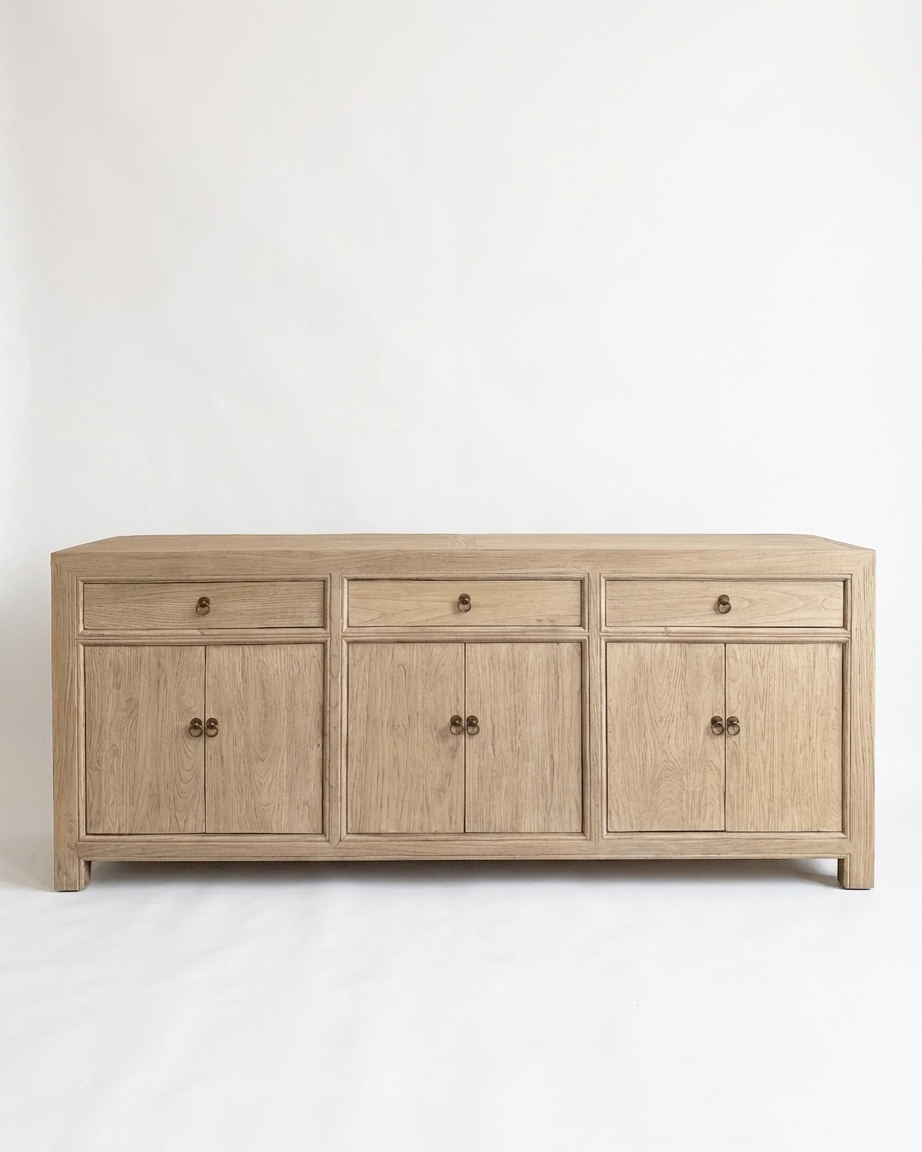
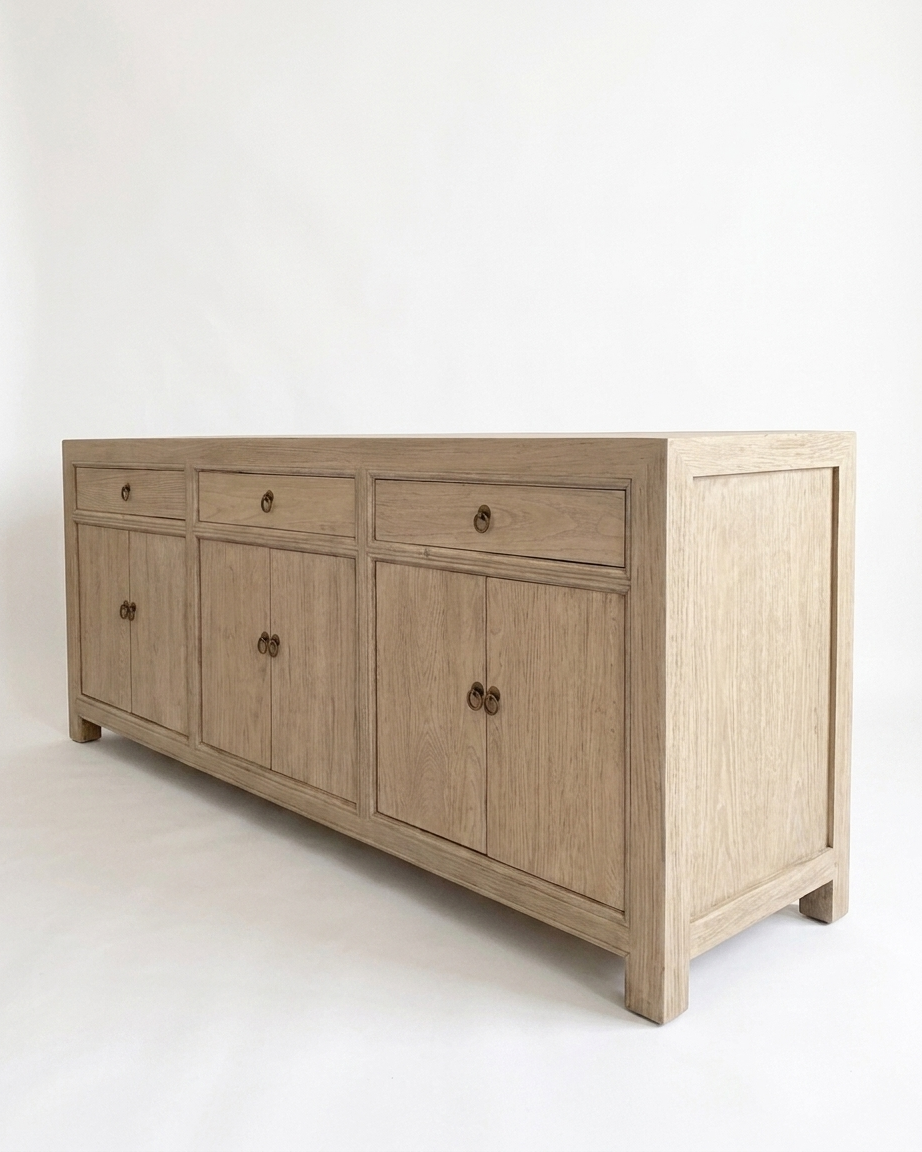


Elm Sideboards & Buffets
Our elm sideboards are built from reclaimed elm sourced in northern China. The wood keeps its open grain, knots and weathered surface, so no two pieces share exactly the same tone or texture.
Widths run from about 47 inches for a compact buffet to just over 90 inches for a long dining room wall, and most pieces sit 17 to 18 inches deep. Choose doors with interior shelves for closed storage, drawers for flatware and linens, or one of the lower pieces to sit under a TV. The black versions use the same elm with a dark finish for a heavier, more graphic look.
For tables, benches and nightstands in the same wood, see Solid Elm Wood Furniture.
FAQ
What's the difference between a sideboard, a buffet and a credenza?
Mostly the room it lives in. Sideboard and buffet both describe a long, low storage piece for the dining room, usually close to counter height so you can serve from the top. Credenza is the same idea in a living room or office, and it's often the word people use for a media cabinet. Any of our elm sideboards can do all three jobs. The lowest pieces, like the Six Door Elm Media Console at 27.5 inches high and the Ara Elm Low Cabinet at 20 inches, are the best fit under a TV.
What is reclaimed elm?
Reclaimed elm is elm wood that has been used before and is remade into new furniture. Because it has already dried and aged, it tends to show filled knots, small splits, old marks and shifts in color across a single top. Elm is a hard, dense wood with a strong grain, so it holds up well to everyday use in a dining room or hallway.
What size sideboard do I need?
For a dining room, a sideboard looks best when it's a little shorter than the table it sits behind, and you'll want at least 36 inches of walkway between the sideboard and the backs of the chairs. Under a TV, pick a piece several inches wider than the screen on each side. Our 47 to 59 inch pieces suit smaller walls and entryways, and the 75 to 90 inch sideboards are built for long dining or living room walls.
Natural or black elm?
Natural elm ranges from honey to soft gray and suits light, airy rooms with linen, plaster and pale floors. Black elm reads darker and more graphic. It anchors a room with white walls or warm wood floors, and the texture of the grain still comes through the finish.
How do I care for an elm sideboard?
Dust with a soft, dry cloth and wipe up spills quickly. Use coasters under glasses and vases, and keep the piece out of strong direct sun and away from heating vents. Solid wood moves with the seasons, so small splits can open slightly in dry months and close again when the air is more humid. An occasional coat of furniture wax helps keep the surface from drying out.