


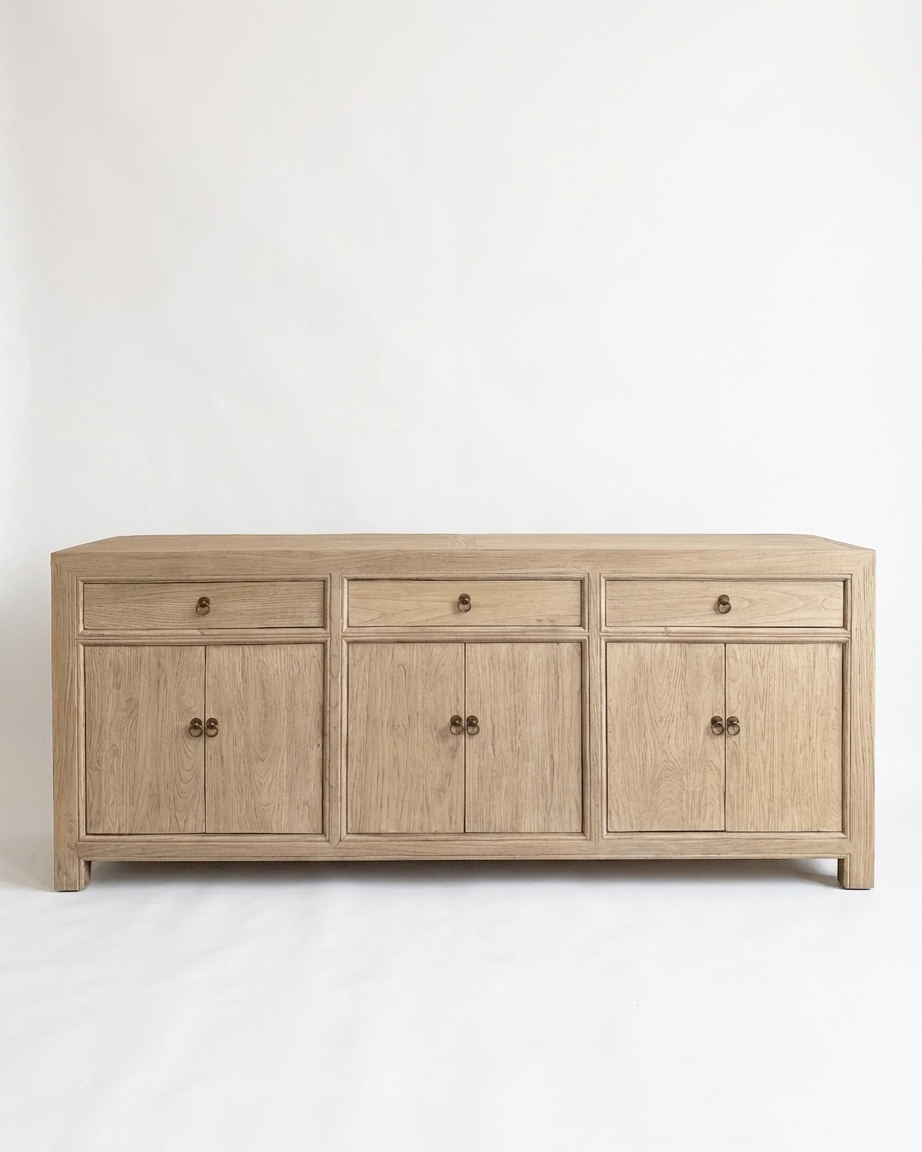
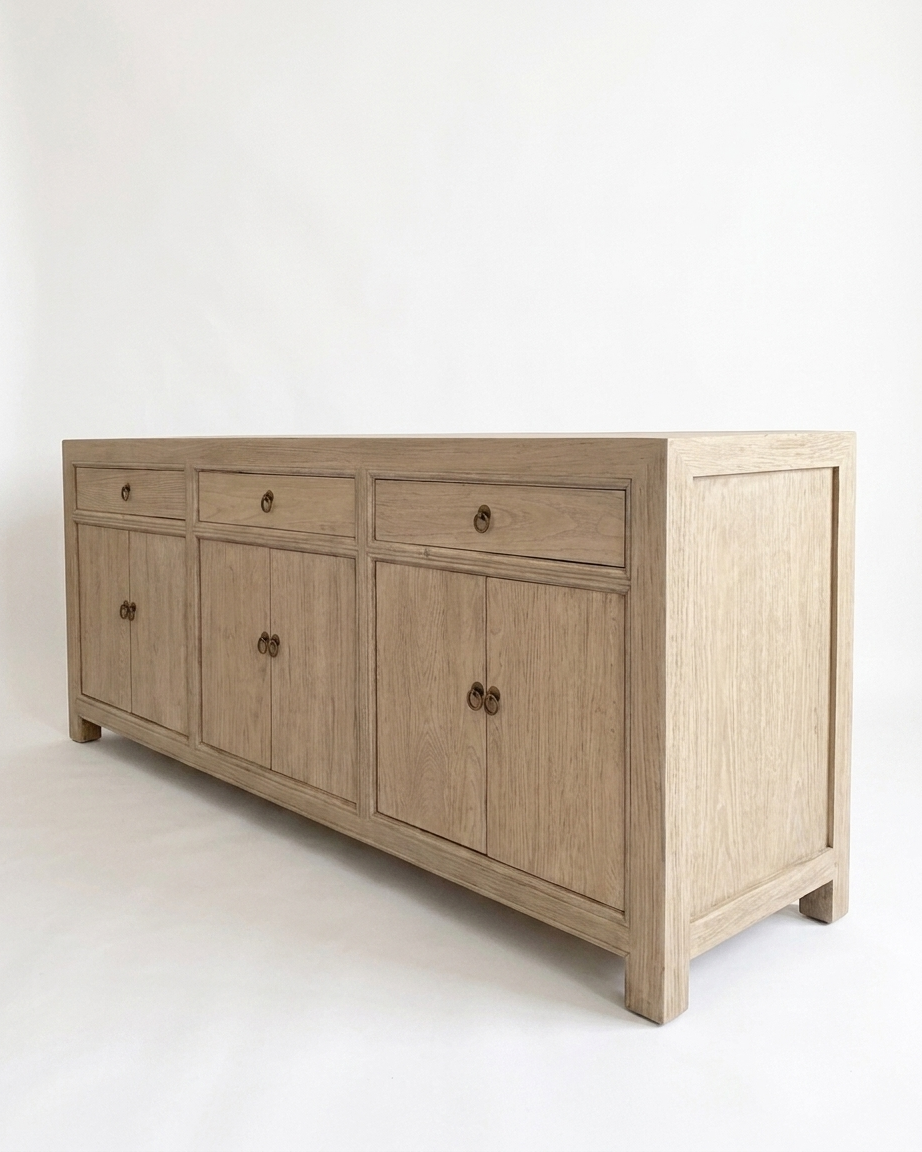


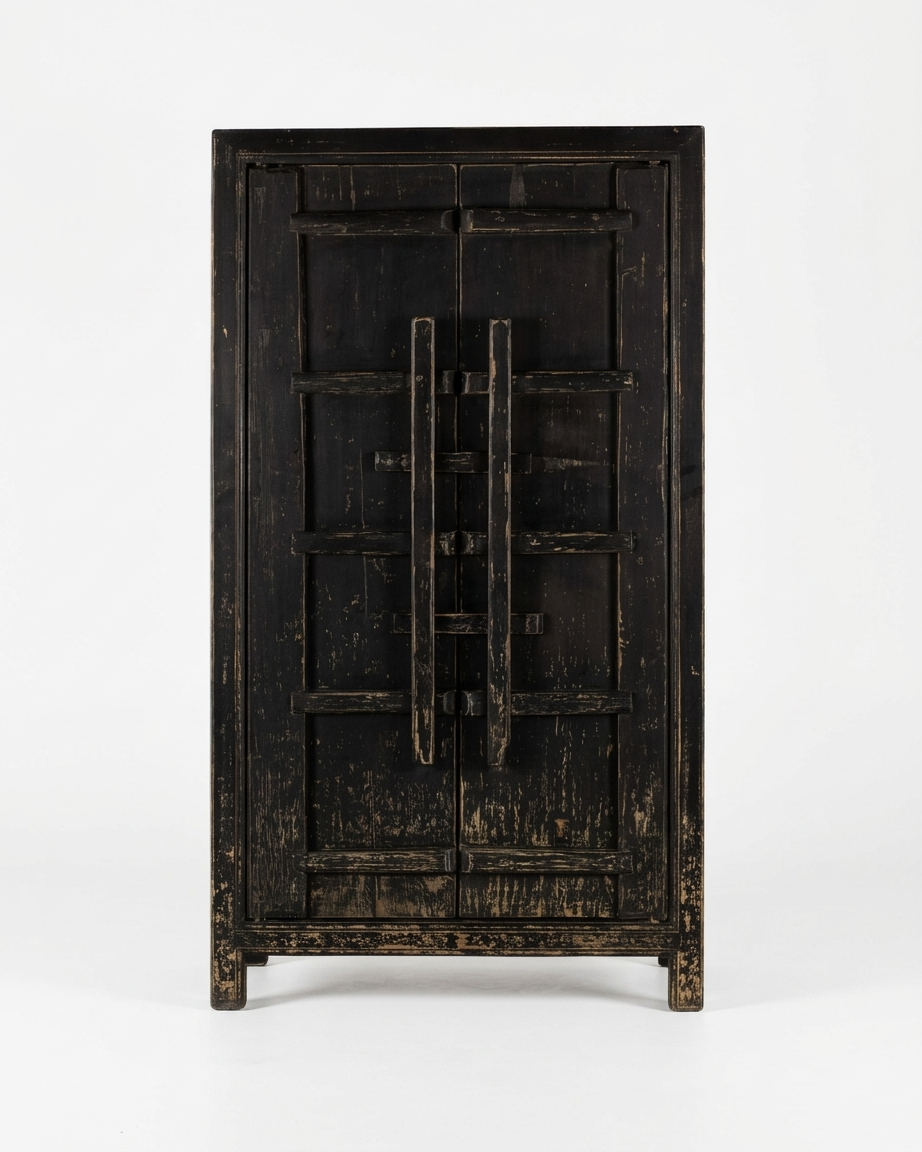
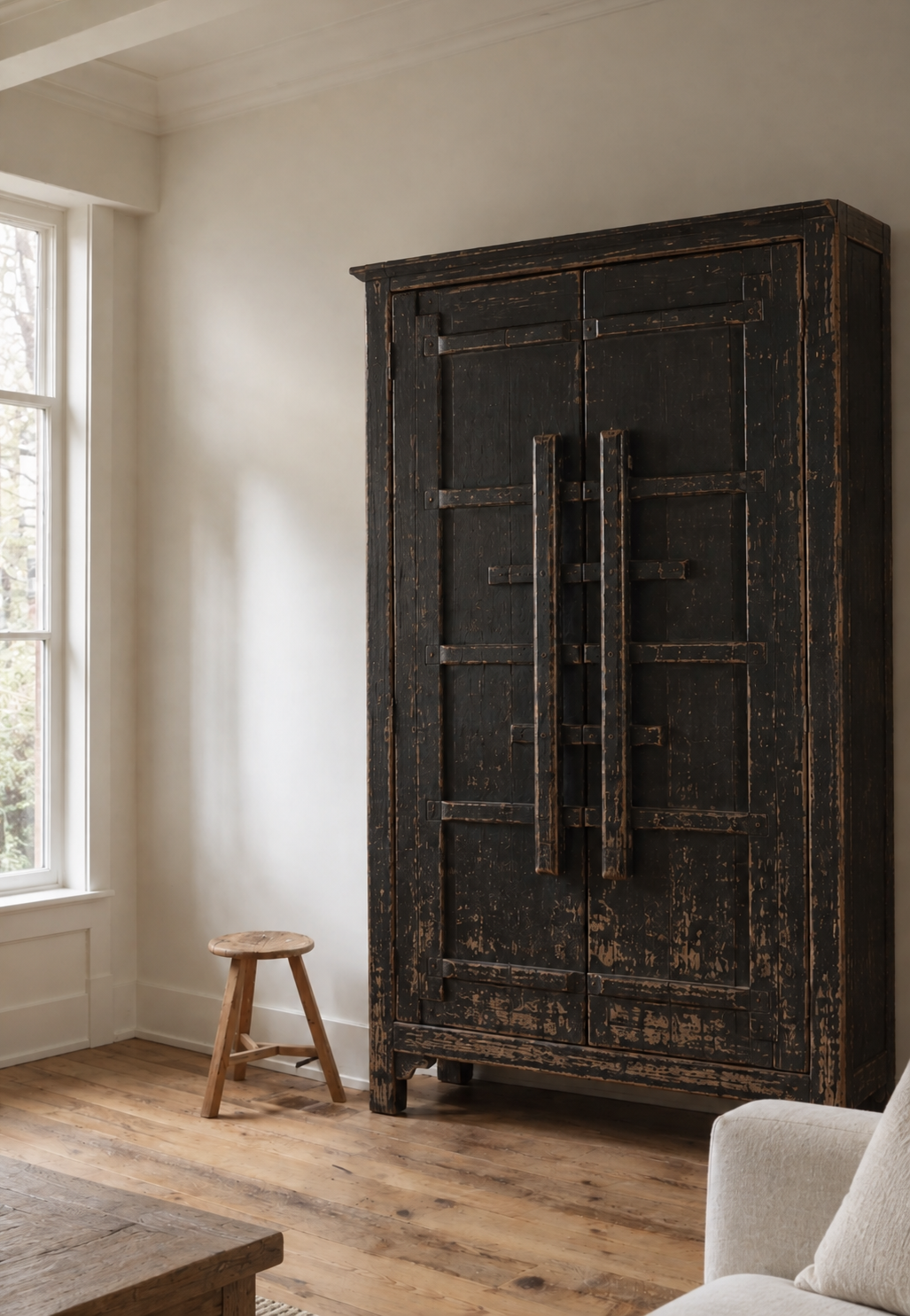


Solid Elm Wood Furniture
Solid Elm Wood Furniture is our collection of sideboards, cabinets, dining and coffee tables, benches, nightstands and armoires made from solid elm. The grain shifts from piece to piece, so every design carries its own character.
The Wood
Elm has been a working wood in northern China for centuries, used for farmhouse tables, benches and storage pieces built for everyday use. It is dense and heavy, with an interlocking, swirling grain that gives it strength and visual movement. Over time it deepens in tone, so a solid elm piece tends to look better with age.
The Product
Every piece in this collection is made from solid elm rather than veneer, so the grain runs through the whole piece and the furniture can be refinished and handed down. The forms stay simple and grounded, and finishes are kept to natural or black so the wood remains the focus in any room.
The Craft
Our elm furniture is handcrafted in the northern regions of China, where the wood has long been part of daily life. Knots, color shifts and small variations in the surface are part of the material, not flaws to hide, and they're what make each piece impossible to replicate.
FAQ
What styles does solid elm furniture work with?
Elm suits most warm, natural interiors. In its natural finish it fits wabi sabi, Japandi and rustic rooms, where its knots and grain read as character. In black it leans more modern and works well in organic modern spaces with linen, stone and iron. Because the forms are simple, elm also mixes easily with oak, cane and upholstered pieces.
What is the difference between solid elm and elm veneer?
Solid elm furniture is made from boards of elm through their full thickness. Veneer is a thin slice of wood glued over plywood or MDF. Solid wood is heavier, shows real grain on the edges and ends, and can be sanded, refinished and repaired over the years. Veneer is lighter and cheaper, but once the surface is damaged there is little wood underneath to work with.
Why does elm furniture have cracks and knots?
Elm is a natural material that moves slightly with changes in temperature and humidity. Small surface checks, open knots and color variation are normal, especially in older or reclaimed boards, and they don't affect the strength of the piece. Many of our customers choose elm for exactly these details, since they give each piece its own history and make it impossible to replicate.
How do I care for solid elm furniture?
Dust with a soft, dry cloth and wipe spills right away. Use coasters and placemats under hot dishes and glasses, and avoid harsh cleaners or silicone sprays. Keep the piece out of constant direct sun and away from heating or cooling vents to limit movement in the wood. Once or twice a year, a light coat of furniture wax or oil keeps the surface nourished and the finish even.
What finishes does your elm furniture come in?
Most of our elm pieces come in a natural finish that shows the wood's warm, honey-to-grey tones, and several are also offered in black. The black finish keeps the texture of the grain visible, so it still reads as solid wood rather than paint. Both work across wabi sabi and organic modern interiors, and mixing the two in one room adds depth.