




Rattan & Cane Chairs
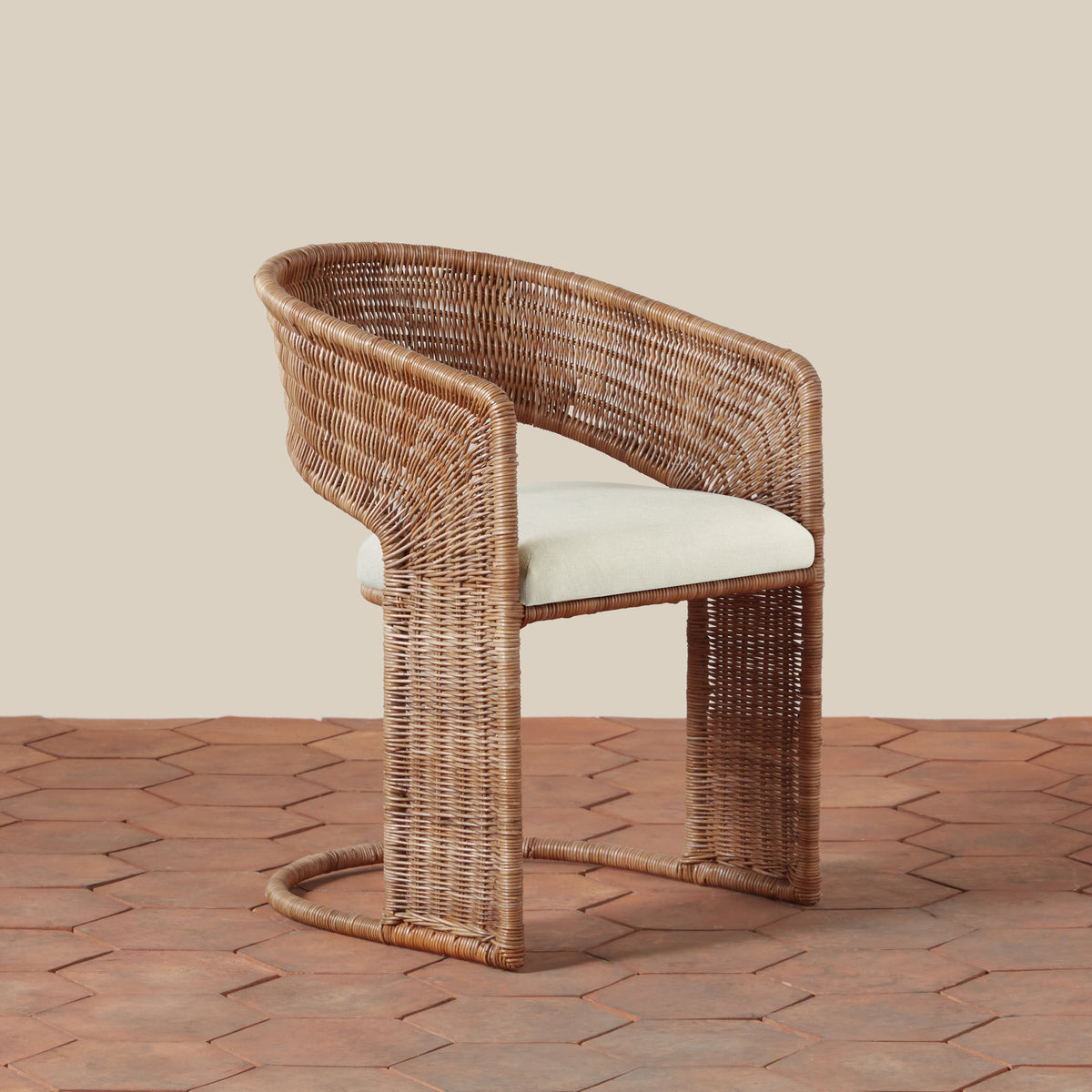
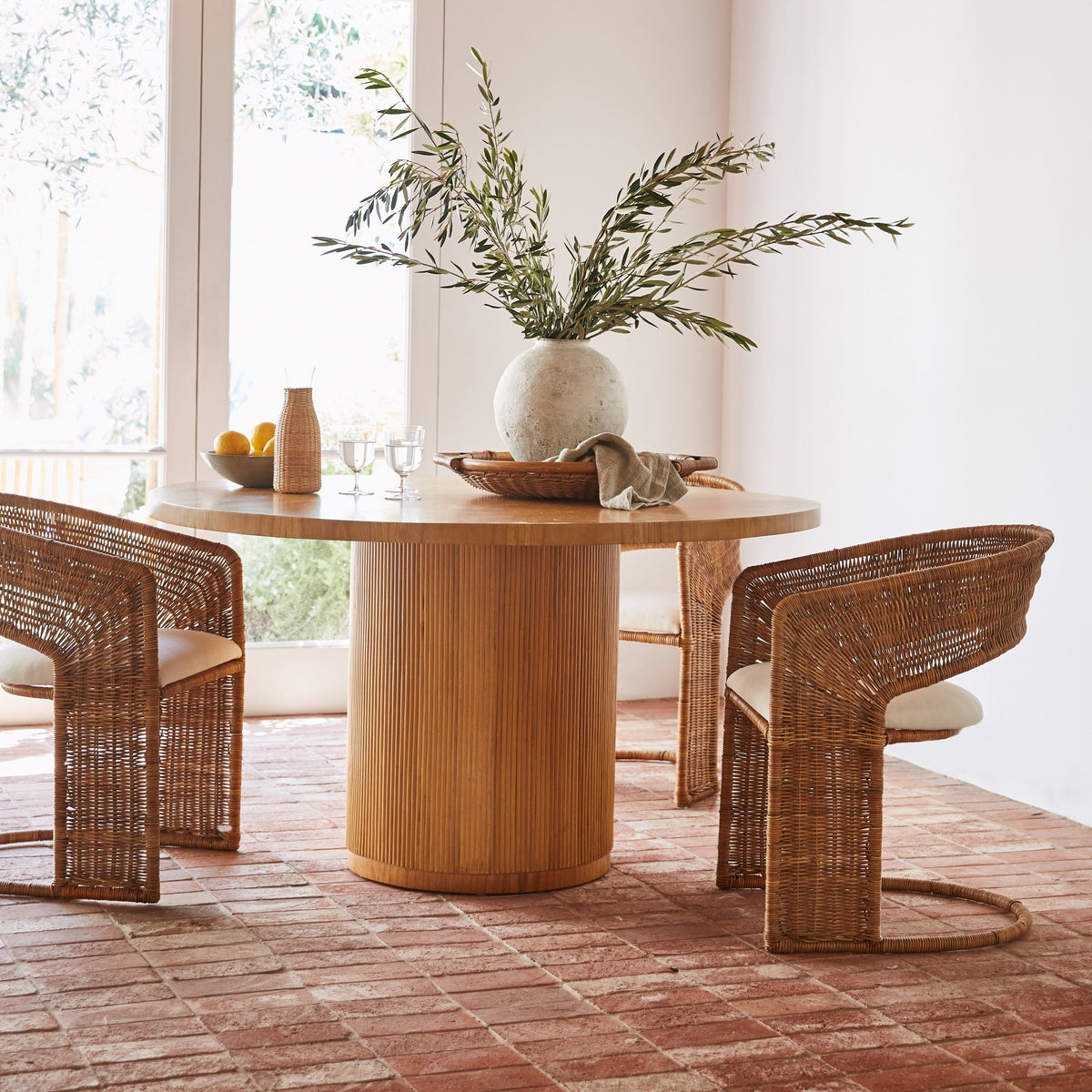
Every chair here is woven by hand, in natural rattan, cane, seagrass, water reed or all-weather cord, over frames of teak, bamboo, wood and wrought iron. A woven chair gives a room texture that upholstery can't, and because light passes through the weave, even a full set around a table feels open rather than heavy.
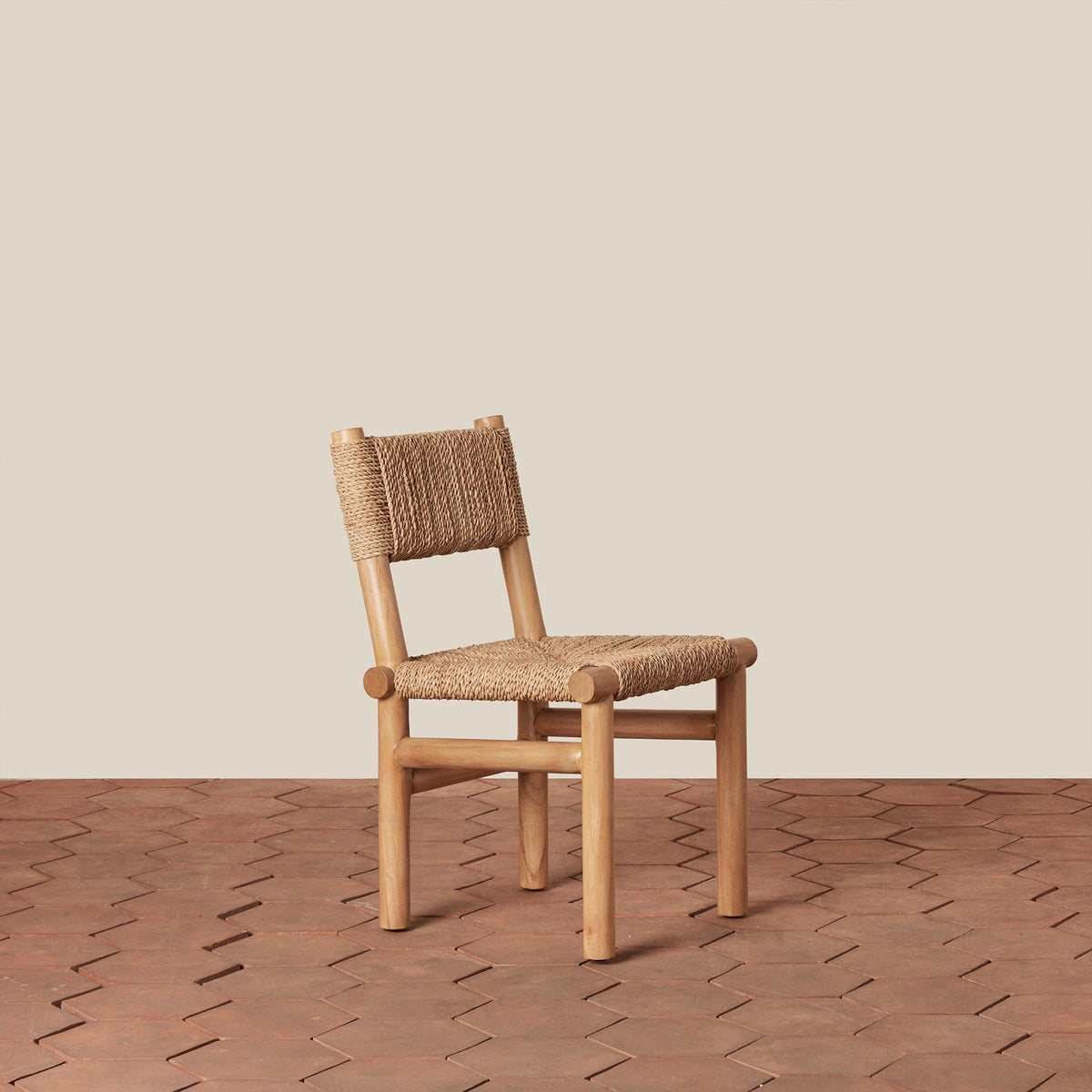
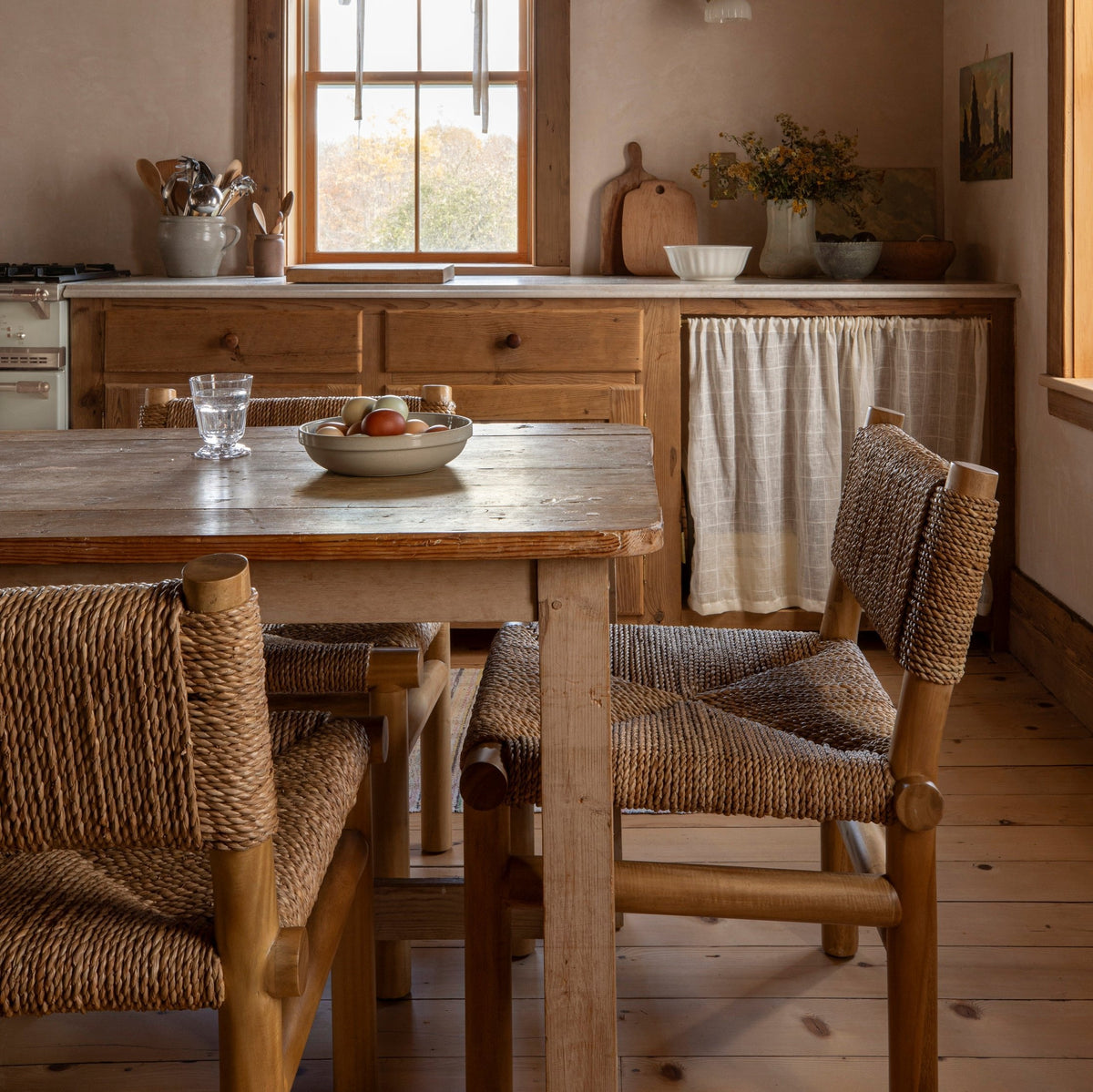
For the dining table, choose woven side chairs and armchairs, from cane-backed mid-century designs to teak chairs with woven seats. For a living room or bedroom corner, look at the swivel and lounge chairs, most with a linen cushion. A few pieces are made for indoor and outdoor use.
For more seating, see Dining Chairs and Accent Chairs.
FAQ
What's the difference between rattan, cane and wicker?
Rattan is a climbing palm with strong, solid stems, often steamed and bent into chair frames. Cane is the thin outer skin of the rattan stem, woven into seats and backs, often in an open pattern. Wicker isn't a material at all but the weaving technique, which can use rattan, reed or an all-weather synthetic fiber.
Are rattan and cane chairs sturdy enough for everyday use?
Yes. Rattan is strong for its weight and has a little natural flex, which makes woven seats comfortable for long meals. On our chairs, the weave sits over a solid frame of teak, bamboo, wood or wrought iron, depending on the piece, and that frame carries the load.
Can I use rattan chairs outdoors?
Natural rattan and cane are made for indoors. The chairs labeled indoor/outdoor, and our teak chairs with synthetic cord weaves, can go on a covered patio or porch. For the indoor/outdoor wicker chairs, protective covers help them last longer outside.
How do I clean a woven chair?
Vacuum the weave with a brush attachment to lift dust from the gaps. For marks, wipe with a cloth that's only slightly damp, then let the chair dry fully before anyone sits on it, since damp rattan can stretch. Keep woven chairs away from heating vents and strong direct sun.
Will natural rattan change color?
Yes, gradually. Natural rattan and cane warm toward a deeper honey tone with light and use. Many people prefer the look after a year or two, and it's a sign the material is real rather than synthetic.