




Apothecary Tables & Cabinets
An apothecary table takes its name from the old pharmacy cabinets built with rows of small drawers for herbs and remedies. The idea still works at home. Plenty of shallow storage gives keys, linens, flatware, chargers and all the small things a place to go.
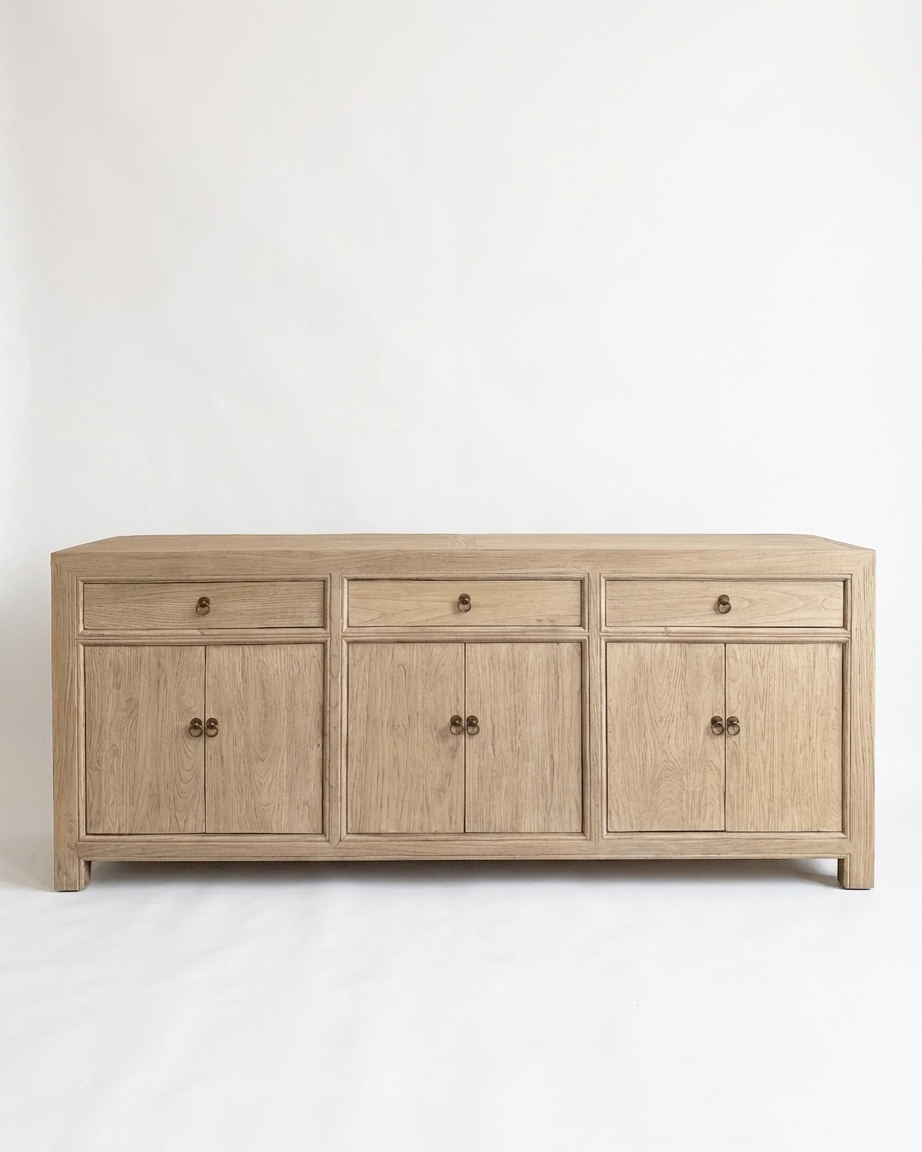
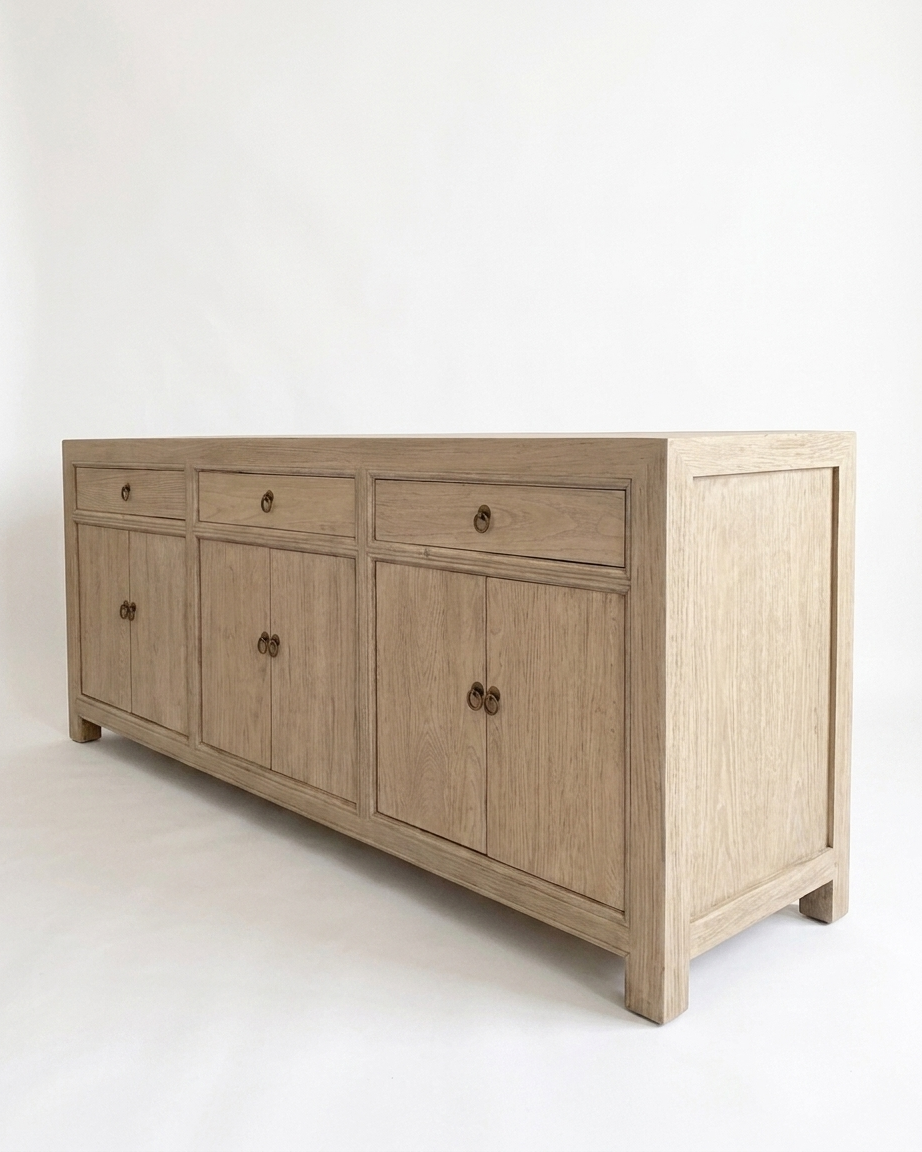
Our pieces are built in elm from northern China and in reclaimed pine. The Thirteen Drawer Elm Console Table and the Nine Drawer Elm Sideboard are closest to the traditional look, with stacked drawer fronts across the whole face. The Apothecary Console Table is a long reclaimed pine piece with two drawers and a full-length open shelf below. Widths run from 55 to 86 inches.
For more reclaimed consoles, see Reclaimed Wood Console Tables, or browse Elm Sideboards & Buffets.
FAQ
What is an apothecary table?
It's a table or cabinet with many small drawers. The style comes from the storage cabinets pharmacists once used to sort herbs and remedies. Today the name covers any console, sideboard or cabinet with rows of drawers, and the shape works as well in a hallway as it does in a dining room.
Where does an apothecary table work best?
In an entryway it gives keys, mail and sunglasses their own drawer. In a dining room it holds flatware, napkins and candles close to the table. Behind a sofa or in a home office, the drawers keep chargers, remotes and paperwork out of sight while the top stays free for a lamp and a few objects.
How big are these pieces?
Widths run from 55 inches for the Elm Three Drawer Cabinet to 86 inches for the Apothecary Console Table. Depths stay between 16.5 and 18.5 inches, so they sit close to the wall, and heights run from 33.5 to 36 inches, close to counter height.
What's the difference between an apothecary table and a sideboard?
A sideboard usually leans on doors and open shelves for larger items like serving bowls and platters. An apothecary piece puts the drawers first, with more and smaller compartments for things that get lost in a cabinet. Several of our pieces, like the Nine Drawer Elm Sideboard, do both.
How do I care for wood drawers?
Dust with a soft, dry cloth and wipe spills right away. Solid wood moves with humidity, so a drawer can feel a little tight in humid months. Rubbing some paste wax along the drawer runners helps it slide smoothly again. Keep the piece out of strong direct sun and away from heating vents.