


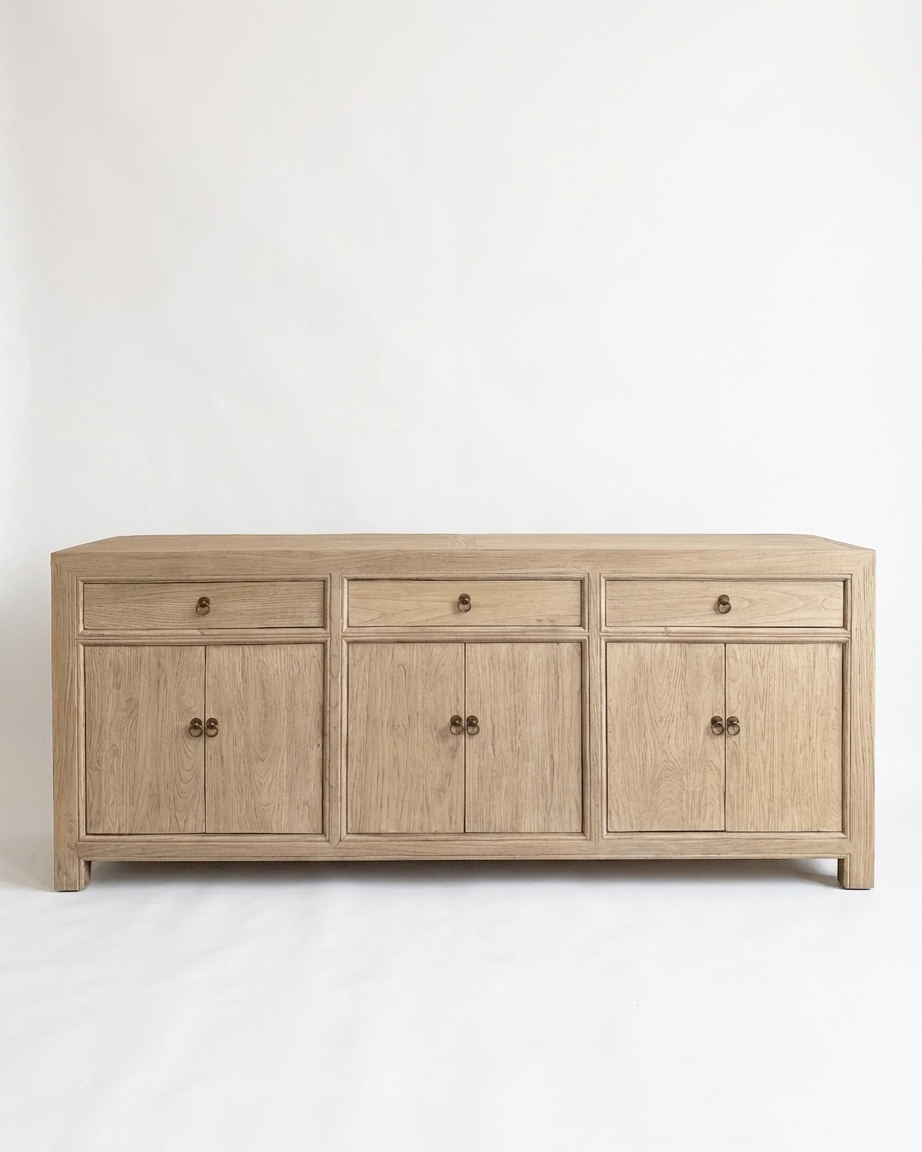
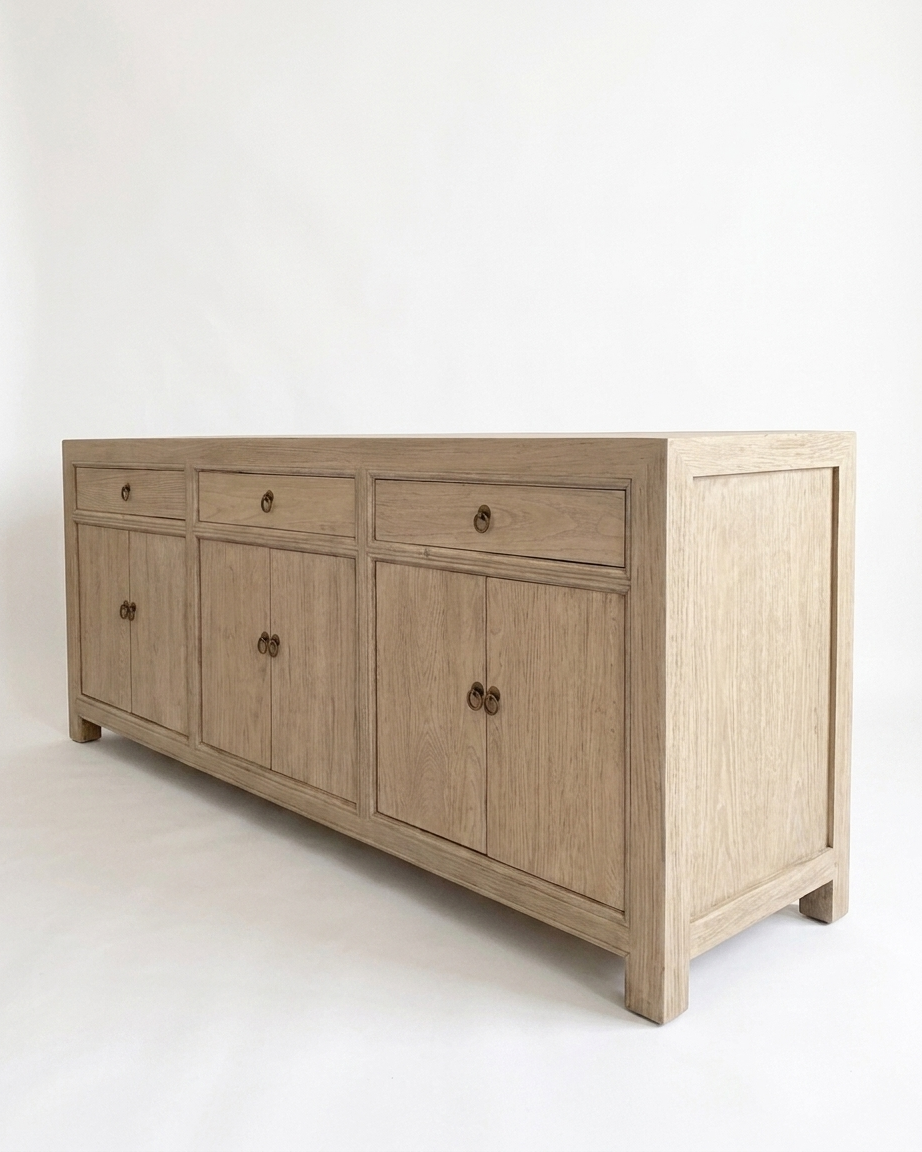


Rustic Sideboards
Our rustic sideboards are built from reclaimed wood that has already lived a first life. Most are reclaimed elm from northern China, with open grain, knots and the weathered surface of old timber, and the elm pieces are solid wood with no veneer. Two are reclaimed pine in a hand-scraped or worn black finish.
They run from 47.5 inches for a small wall up to 90.5 inches for a long dining room, with doors, drawers or both. Use one as a dining room buffet, as a credenza in a living room or office, or as a long, low console under a TV.
For the full elm range, see Elm Sideboards, Buffets & Credenzas. For more pieces with the same weathered character, see Rustic Furniture.
FAQ
What makes a sideboard rustic?
It's the visible history in the wood: knots, small cracks, uneven color and edges softened by years of use. Some rustic furniture is made from new lumber and distressed to look old. Ours gets its character from reclaimed timber, so the marks are real.
Is reclaimed wood as sturdy as new wood?
Yes, and often more stable. Old timber has had decades to dry out fully, so it tends to move less with changes in humidity than freshly cut wood. Our elm sideboards are solid wood throughout, with no particleboard.
What's the difference between a sideboard, a buffet and a credenza?
The names overlap. A buffet is the traditional dining room term, a sideboard is the general name for a long, low storage piece, and a credenza usually means a lower, sleeker version for a living room or office. Any piece in this collection can fill all three roles.
Will my sideboard look exactly like the photos?
Not exactly, and that's part of the appeal. Reclaimed wood varies from board to board in grain, knots and tone, so every sideboard is a little different from the one pictured. The size, design and hardware stay the same.
How do I care for a reclaimed wood sideboard?
Dust with a dry cloth, and use coasters and trivets on the top. Wipe spills right away rather than letting them sit in the grain. Keep the piece out of strong direct sun and away from heating vents, and a coat of furniture wax once or twice a year will keep the surface from drying out.